The Mico Foundation History
A Legacy Built
To Protect The Future.
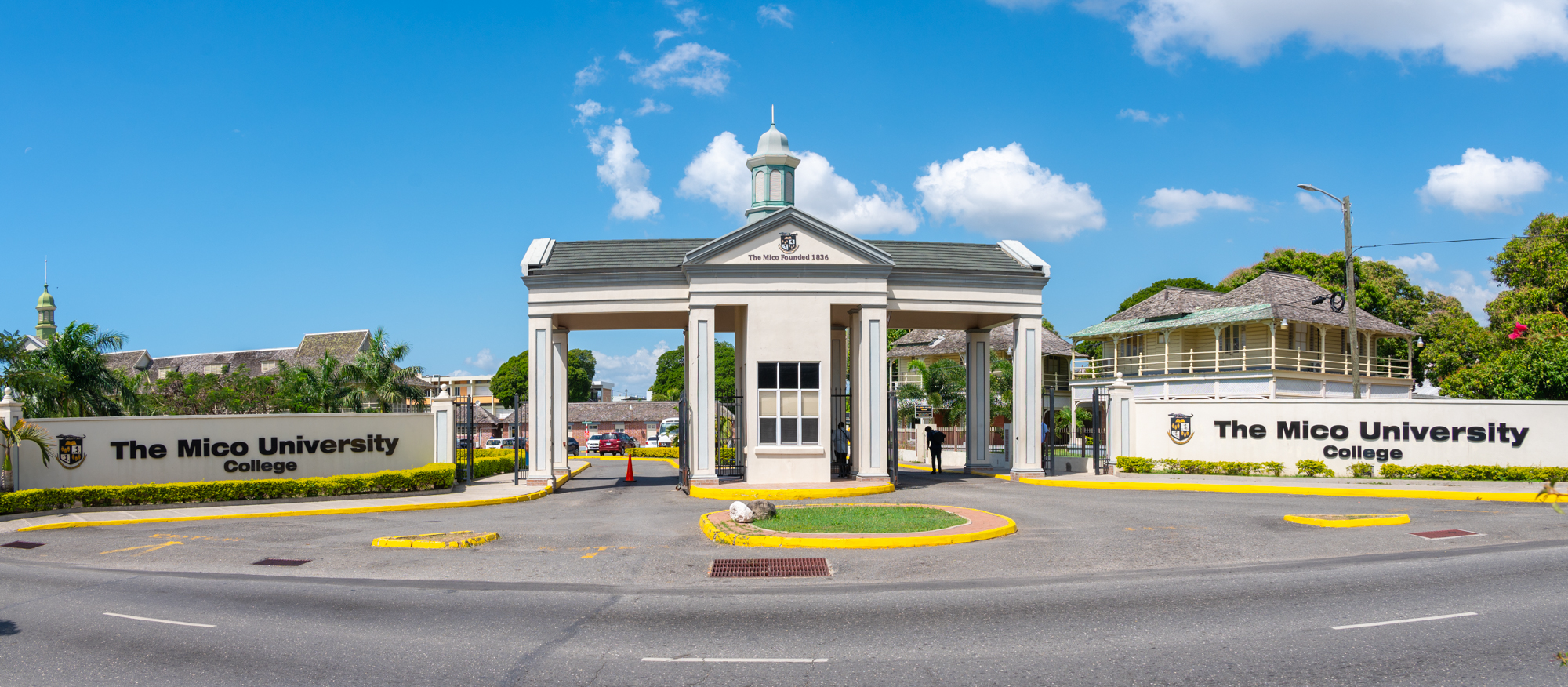
From historic stewardship to future impact.
Since its inception in 1836, The Mico has undergone remarkable transformations, cementing its position as the premier educational institution in the Caribbean. While the decades that followed were marked by significant growth, this excerpt focuses on two pivotal eras in The Mico Foundation's history: the transformative years leading up to its founding and the critical decades during which it established itself as a cornerstone of the University College.
1950s and 60s — Principal Glenville H. Owen
This era marked one of the most transformative periods in the history of The Mico University College (then known as Mico Teachers' College). During these two decades, the College evolved from a long-standing male teacher-training institution into a modern, co-educational college that played a central role in Jamaica's educational expansion before and after independence in 1962.
Overall, the 1950s were characterized by modernization, co-education, and curriculum reform, while the 1960s were defined by rapid expansion, alignment with Jamaica's independence, and the broadening of teacher education into the secondary sector. A massive building programme was undertaken in preparation for the changing role in teacher training, and in particular to meet the needs of the expanding school system of the 1960s. These changes established the foundation for Mico's later evolution into one of the Caribbean's foremost institutions for teacher education.
The 1970s
Marked one of the most transformative decades in the history of The Mico University College. Under the leadership of Dr. Errol Miller, who assumed the principalship in 1972, the institution expanded its national footprint to support Jamaica's sweeping educational reforms.
Key developments from this era include:
Secondary Education Expansion: Moving beyond its historical focus on primary and junior secondary training, Mico restructured its curriculum to prepare teachers across the full secondary spectrum with dual subject specializations. By the decade's end, Mico had become Jamaica's primary and largest producer of secondary school educators.
Special Education & Mico CARE: When the Jamaican government integrated special education into the public funding framework in 1974, it selected Mico as the designated national training institution for the field. In the late 1970s, Dr. Miller partnered with the Dutch government to establish the Child Assessment and Research in Education (CARE) Center—also known as the Diagnostic and Therapeutic Center.
Infrastructure Growth: To support its growing student body, the campus expanded significantly. Projects included a 300-bed female residence hall on Arnold Road (later named Errol Miller Hall), a new auditorium, a modern cafeteria (now the Bonham Carter Building), dedicated facilities for the Mico CARE Center, and initial architectural planning for a new library.
1980s & 1990s
1981–1995 was the era of Renford A. Shirley. He led a period of major physical expansion, academic innovation, and community outreach. Building on the expansion initiated by his predecessor, Errol Lawrence Miller, Shirley shifted the institution from primarily expanding enrollment to strengthening its academic, physical, and professional capacity. His administration laid much of the foundation for Mico's eventual transition to university college status in 2006.
R. A. Shirley's tenure saw the development of The Mico Foundation. Although it was conceptualized in 1979 under the then-principal Errol Lawrence Miller, it was consolidated during R. A. Shirley's tenure to help manage institutional assets, land, and endowment funds independently.
Shirley expanded the special education programme through a partnership with the University of the West Indies (UWI) to introduce a joint Bachelor of Education degree in Special Education. This made Mico a major regional hub for special education teacher training.
He built on the Child Assessment Research and Education (CARE) by continuing to engage the financial and technical support from the Government of the Netherlands to allow the CARE Center to become a premier facility for diagnosing and supporting children with learning challenges and special needs in the English-speaking Caribbean. He spearheaded the construction of the New Library building, which now bears his name, to support tertiary-level research and expanded academic offerings.
The Indian, African, and Caribbean (INAFCA) Museum was integrated into the library facility to preserve cultural heritage and integrate historical artifacts into the educational curriculum.
His collaboration with the Kiwanis Club of North St. Andrew resulted in the building of a facility that housed The Mico Youth Counselling & Development Center to help provide counselling for emotional, behavioural, and substance abuse issues in the surrounding community, while serving as a practical training lab for students of guidance and counselling.
By expanding degree programmes, enlarging physical capacity, and deepening research facilities, Shirley's administration laid essential groundwork for Mico's eventual elevation to full University College status in 2006.
1996 - 2014
Professor Claude Montgomery Packer assumed leadership of The Mico Teachers' College in 1996. He was considered to be a visionary leader whose work has created a lasting legacy from which generations will benefit. His successful transition of The Mico Teachers' College to The Mico University College in 2006 could be considered his defining achievement. As Principal and later President of The Mico University College, The Mico experienced significant institutional transformation, academic expansion, and modernization.
Under his leadership, The Mico became a degree-granting tertiary institution. This milestone modernized the College's governance structure, replacing the traditional teacher-training model with a university system of faculties, academic boards, strengthened institutional management, expanding research capabilities, and a capacity for research, scholarship, and academic innovation. Beginning in 2004 and continuing through 2008, Packer spearheaded the introduction and expansion of undergraduate and graduate degree programmes.
Leveraging his background as a mathematician, Packer placed a strong emphasis on expanding and elevating Mathematics, Science, and Technology education across teacher training curricula, which pioneered STEM Education at The Mico.
Although the concept of The Mico Museum had its birth under R. A. Shirley, it was Packer who, through partnership with the Institute of Jamaica, oversaw the opening of the Mico Museum on the main campus in 2004. It was created to preserve historical artifacts related to the development of education in Jamaica from pre-emancipation to the modern era.
Packer worked with the Ministry of Education to develop national educational standards to align Mico's offerings with national requirements mandating degree-level qualifications for all teachers. Among his other achievements were partnerships with the Jamaican Police Academy to offer specialized training programmes to equip police instructors with structured teaching skills and the development of the Institute of Technology and Education Research (ITER) to serve as the research and outreach arm of The Mico.
Packer's vision was for The Mico to be an institution recognized not only for teaching but also for educational scholarship. In this regard, he partnered with academic institutions mainly in North America to improve the qualifications of the academic staff and joint programmes for both staff and students.
The Story Behind The Foundation
With roots reaching back to 1836, The Mico stands as one of the most significant educational institutions in Jamaica and the wider Caribbean. Its story is one of resilience, service, leadership, and educational transformation.
The Mico Foundation was established to support the long-term protection and development of assets connected to The Mico University College. Its purpose is not only administrative — it is deeply connected to legacy, responsibility, and future-building.
Through property stewardship, partnerships, fundraising, restoration, and project support, the Foundation helps ensure that the mission of The Mico continues with strength and stability.
Today, The Mico Foundation continues to serve as a bridge between history and possibility: preserving what came before while helping create what comes next.